Infrastructure integration challenges for Dutch supply chains
The Netherlands handles roughly 30% of European logistics flows. Rotterdam, Schiphol, and a dense network of inland waterways make it a natural distribution hub. Yet beneath this physical efficiency sits a fragmented digital landscape that costs Dutch supply-chain operators millions in lost productivity and delayed decisions.
Most Dutch logistics companies did not choose their current IT architecture. They inherited it through acquisitions, organic growth, and decades of vendor lock-in. The result is a patchwork of warehouse-management systems, transport-management platforms, customs tools, and ERP backends that barely communicate.
This is not a theoretical problem. It is why your warehouse team enters shipping data three times before it reaches the finance system. It is why customers cannot get accurate delivery estimates. It is what keeps the IT budget tied up in maintenance instead of innovation.
The hidden cost of “good enough” integration
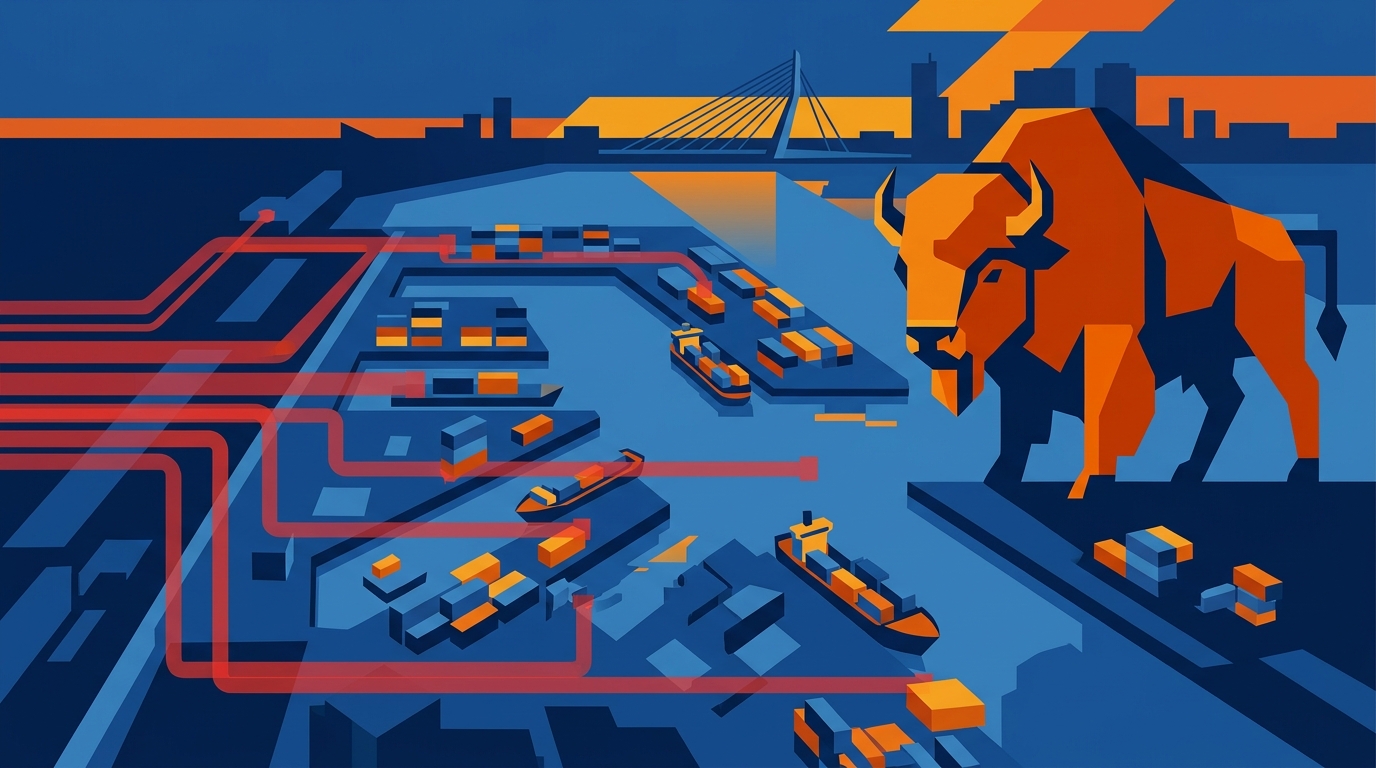
Most Dutch supply-chain operators have some integration. They have EDI connections with large customers. They have APIs linking their WMS and TMS. They have nightly batch jobs synchronising inventory with the ERP.
The problem is not the absence of integration, but its quality.
Consider a mid-sized logistics provider with three warehouses. It may have:
- A WMS from the early 2010s with years of custom modifications.
- A TMS acquired through a merger, with its own data model.
- An ERP system for finance and procurement.
- Customer portals that promise real-time visibility.
- Customs systems that need regulatory-compliance data.
Each connection was created at a different time, by different suppliers or internal teams, using different approaches — which is precisely the supply-chain exposure regulators now ask about. Some use SFTP file drops. Others use SOAP web services. A few have REST APIs. One critical integration may run on a scheduled stored procedure that only the original developer understood — and that developer left years ago.
This technical debt grows. Every new customer requirement, regulatory change, or operational improvement has to navigate the maze. Work that should take weeks takes months. Work that should cost thousands costs tens of thousands.
Why standard solutions fall short
Enterprise integration platforms promise to solve this. Large vendors provide ready-made connectors, visual workflow designers, and managed infrastructure. For some organisations, these work well.
But Dutch supply-chain operators face specific challenges that generic solutions struggle to handle.
Regulatory complexity: Dutch customs must comply with national requirements and EU-wide regulation. The new EU Customs Data Hub, Import Control System 2 (ICS2), and changing sustainability-reporting requirements create a moving target that ready-made connectors cannot always keep up with.
Partner diversity: A typical Dutch logistics company works with dozens of carriers, hundreds of customers, and multiple port authorities. Each has its own data formats, connection preferences, and change schedule. Standardisation sounds attractive until your largest customer insists on its own format — and their business matters more than architectural purity.
Legacy investment: That “old” WMS may contain two decades of warehouse-specific optimisation. Replacing it is not only a technology decision; it is an operational risk that needs to be weighed carefully.
The real integration decisions
Successful supply-chain integration projects share characteristics that distinguish them from failed attempts.
Start with data, not systems
The instinct is to begin with system connections: “We need to integrate our WMS with our TMS.” That leads to point-to-point solutions that become tomorrow’s legacy.
Better projects begin with data questions: what information needs to flow, how often, and with what accuracy? Who needs to see it, when, and in what format?
A shipment status may need to update every 15 minutes for customer visibility, but only needs to synchronise with the ERP once per day for invoicing. Understanding these different requirements prevents overbuilding some connections and neglecting others.
Accept asymmetry
Not every integration deserves the same investment. Some are strategic: they enable new services, improve the customer experience, or reduce operational cost. Others are merely necessary for regulatory compliance or basic operations.
Strategic integrations justify custom development, careful architecture, and ongoing investment. Necessary integrations should be built quickly, reliably, and cheaply, even if the solution is not elegant.
The mistake is treating every integration the same way. Over-investing in compliance connections and under-investing in customer-facing connections creates neither cost savings nor competitive advantage.
Plan for change
The Dutch logistics sector faces substantial regulatory and market shifts. Brexit changed UK trade flows. EU sustainability regulation creates new reporting requirements. Customer expectations for visibility continue to rise.
Integration architecture must handle change without requiring a rebuild. That means:
- Maintaining a clear separation between data transformation and data transport.
- Documenting data models and business rules explicitly.
- Adding monitoring that detects when integrations diverge from expected patterns.
- Creating test environments where changes can be validated safely.
The build-versus-buy decision
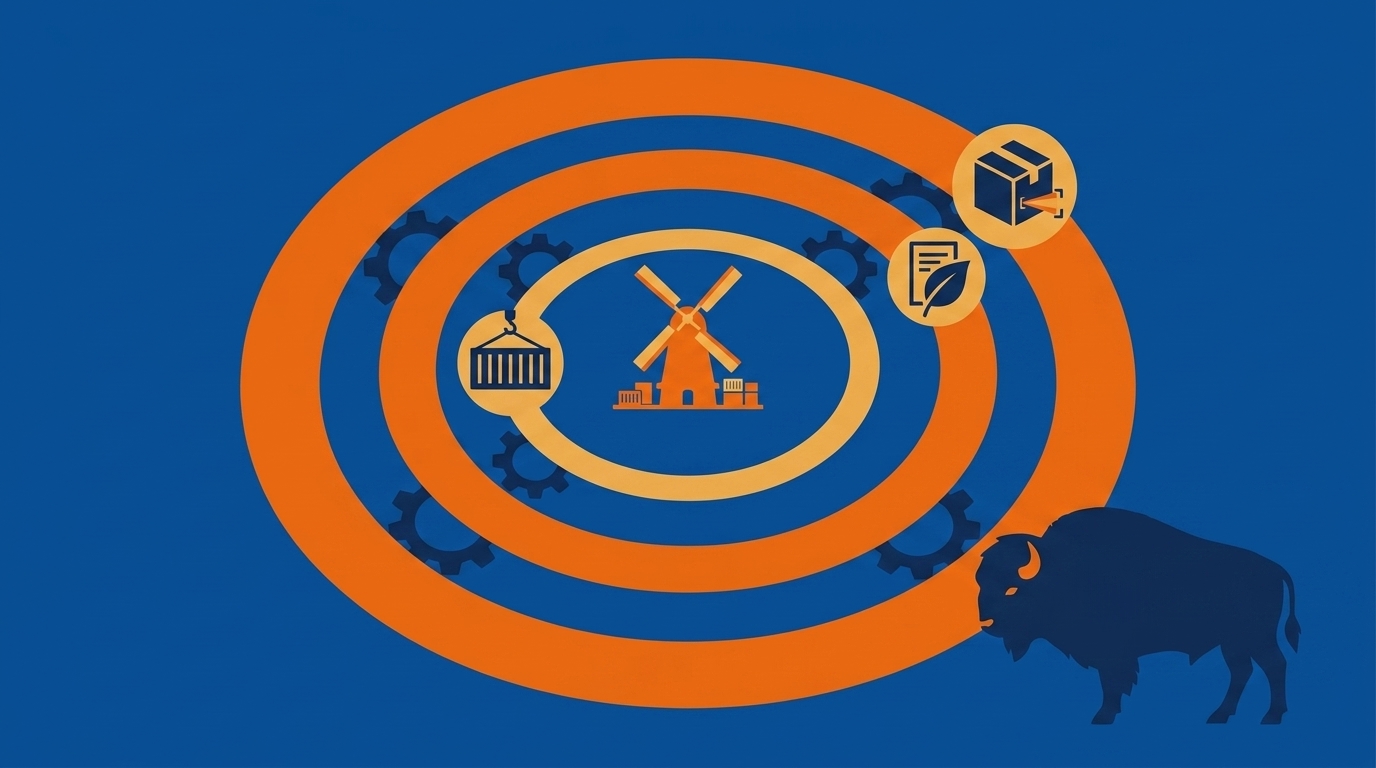
Every Dutch logistics provider faces this question. Build custom integrations yourself? Buy a platform solution? Work with specialists?
There is no universal answer, but there are honest trade-offs.
Building in-house gives maximum control and can be cost-effective if you have developers who understand both the technology and your operational context. The risk is that those developers become single points of failure and are pulled towards urgent operational work instead of systematic improvement.
Platform solutions from large vendors reduce technical risk and offer enterprise-grade reliability. The risk is that licence costs accumulate, customisation becomes expensive, and you depend on the vendor’s roadmap and pricing decisions.
Specialist partners can combine operational understanding with technical capacity, particularly when they focus on your sector. The risks are external dependency, potential knowledge loss, and the continuing cost of maintaining the relationship.
Most successful operations use a combination: platforms for standard patterns, specialists for complex challenges, and selective internal development for genuinely differentiating capabilities.
Where Dutch supply chains are heading
The organisations investing most intelligently today are focusing on three areas.
Event-driven architecture is replacing batch-based integration. Instead of overnight synchronisations that create data lag and reconciliation headaches, leading operators implement real-time event streams. When a container is scanned, every relevant system knows within seconds, not hours.
API-first thinking is becoming standard for customer-facing systems. Instead of building separate integrations for every customer, companies expose well-designed APIs that customers can use according to their own needs.
Investment in data quality is finally receiving attention. Integration cannot fix bad data at its source. Organisations are investing more in input validation, master-data management, and automated quality monitoring.
Making progress without paralysis
The scope of integration challenges can feel overwhelming. The temptation is to launch a large transformation programme or keep patching the existing systems.
Neither extreme works well. Large transformation programmes in logistics have a poor track record: too many variables, too much operational risk, and too little tolerance for disruption. But remaining in maintenance mode means falling further behind competitors and customer expectations.
The pragmatic path is strategic incrementalism. Identify the integration gaps with the greatest impact, address them through well-planned projects, build organisational capability with every effort, and maintain a coherent architectural direction even when individual projects differ.
This requires an honest assessment of the current state, clear prioritisation based on business impact, and realistic recognition of the organisation’s capacity for change.
Dutch supply-chain operators facing these integration challenges do not need more technology options. They need clearer thinking about which problems matter most and how to solve them sustainably. If your organisation is making these trade-offs, a focused conversation about priorities and practical approaches can cut through the complexity.